PICO 4 Hands On! The Light & Cheap QUEST 3 Competitor
My private Pico 4 hands-on at Gamescom: price and release, design, pancake lenses, colour passthrough, controllers, content plans and new accessories.
 By CasPublished Updated Video + article6 min read
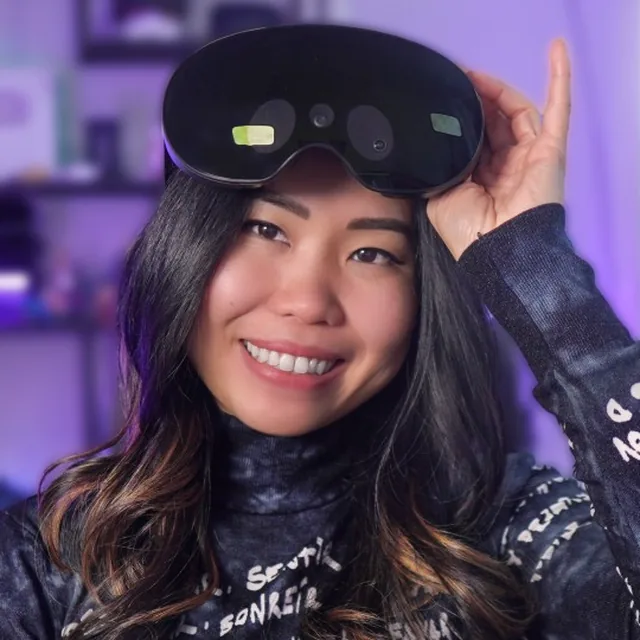
I was one of the first to get a private Pico 4 hands-on, at Gamescom, where Pico had a big presence. I played with the headset for about an hour and talked with the Pico team. My take: this headset is nuts. It’s a step up from the Quest 2, with a new design, new controllers and new features, and I think it’s set to compete with the Quest 3. Pico also has big plans for content, and the price is very competitive. Here’s everything I learned, as of September 2022. Pico didn’t sponsor this video.
Pico 4 price and release
Two models are coming: the basic consumer Pico 4 and the Pico 4 Enterprise. There were rumours of a steep price, but the consumer model costs:
- €429 with 128GB
- €499 with 256GB
That makes it cheaper than the Quest 2, even though it’s a step up.
- Pre-orders for the basic model start on 23 September for people in the Pico Neo 3 Link beta programme.
- In early October, pre-orders open to everyone in 13 European countries and major Asian markets.
- Shipping starts on 18 October.
I don’t know when it’s coming to the US yet.
Pico 4 Enterprise
The Enterprise price and release date will be announced at AWE Europe, around 20 October, so I couldn’t try it. The key difference: the Enterprise model has eye and face tracking, and the basic one doesn’t. I guess that one is meant to compete with Project Cambria, Meta’s rumoured enterprise headset also called the Quest Pro. It will cost more, and in Europe you can only buy it as a business. In China, interestingly, it will be sold to consumers too. I hope more countries follow.
Pico 4 hands-on: design and comfort
Despite the name, the basic model is impressive. It’s a lot less bulky than earlier standalone headsets.
- The strap is integrated and works much like the Quest 2 Elite Strap.
- The battery sits at the back again, like on earlier Pico headsets. I’m happy they kept that, because it almost perfectly balances the weight.
- The strap isn’t replaceable, because cables run through it to the battery and the built-in speakers.
- The front is lighter and much thinner, only 35.8 mm at its thinnest. It no longer feels like a brick on your face. It could be thinner still, but it’s a nice step in the right direction.
Gamescom was far too noisy to test the audio or the microphones, so that will have to wait for my review.
Chip, lenses and display
Inside there’s still a Qualcomm XR2, the same chip as in the Quest 2 and Pico’s previous headset, but Pico tuned it for more performance. It also has 2GB more RAM, 8GB in total. Performance won’t jump much. Where this headset shines is the display and optics.
It’s this slim because of pancake lenses, which more and more VR headset makers are moving to. They allow smaller displays placed closer to the lenses, which gets rid of a lot of bulk.
Pico also added semi-automatic IPD adjustment: you set your IPD in the software and the lenses move mechanically to match. That’s so much better than the clunky three-step setting we had before. The range is a bit smaller than on other headsets. With my IPD of 60 I’m actually outside it, but it didn’t bother me.
The displays are still LCDs, so colours aren’t much better than before. It’s not terrible, but I’d like to see OLED colours return. The other numbers:
- Resolution of 4320 x 2160 in total
- 72 or 90Hz refresh rate
- A field of view of 105 degrees, not much different and not the best (we’ll measure it ourselves)
- TÜV Rheinland low blue light certification: reduced blue light and flicker-free screens
It looked beautiful. I didn’t notice any odd visual artefacts and everything looked smooth, but I only had about 30 minutes with a few games, so it needs more testing. If you wear glasses, a glasses spacer comes in the box.
Tracking and colour passthrough
Tracking is always something I’m curious about with Pico, because it hasn’t always been their strength. Headset tracking with the four SLAM fisheye cameras felt good and effortless.
New is the 16-megapixel RGB camera in the middle. By combining data from all five cameras, the Pico 4 shows colour passthrough that’s higher quality and more realistic than the black and white passthrough on the Quest 2. It’s not perfect: there are still distortions and some wonkiness, I think from the software correcting the image, so it doesn’t look like real life and takes some getting used to. But it’s a big improvement, and I can’t wait for good mixed reality games on it. Imagine a Pokémon in your house that you can interact with.
The new controllers
The controllers got a redesign too. They still use optical tracking, but the tracking ring is now an arc and no longer sits on top. That should mean better tracking, fewer occlusion problems and an easier time bringing your hands close together.
In my short time I couldn’t find many blind spots, so it seems improved. Take that with a pinch of salt, though: the games I’d usually test with, like Beat Saber or a shooter where you look down a scope, weren’t available. It makes me wonder if that was on purpose. I’ll test it properly later.
The handle felt a bit short. It fits my hands well, but I have tiny hands, so I wonder if it’s comfortable for people with big ones. A nice touch: a slider pushes up the battery cover so you can easily pull out the two AA batteries.
Pico’s content plans
This matters most. The best headset in the world is a paperweight if there’s nothing to do on it. It was the biggest piece of feedback I gave Pico, and it seems they listened.
- The Pico store went from around 100 games the last time I covered it to over 165 in a few months, including After the Fall, Rec Room and Red Matter.
- Upcoming games like The Walking Dead: Saints & Sinners Chapter 2 are coming too. Pico works closely with developers now, which is why so many VR game announcements mention Pico alongside other platforms.
- A developer fund of 12 million to bring more developers on board.
- The first exclusive is Just Dance, a party dance game that was very popular when I was a kid. I’m not sure it will be Beat Saber popular now, but it’s a start.
There’s also a big operating system update with new menus and multitasking, a partnership with Wave for live music, exclusive documentaries from Discovery Channel, more social features, and a social VR game called Pico Worlds, which I guess competes directly with Horizon Worlds. It brings a new avatar system with over 80 customisation options.
One feature I thought was cool is remote assistance. When you stream your VR view to a phone, the person on the phone can touch anywhere on the screen and the player in VR sees a marker there. That makes it much easier to introduce people to VR, or to help a friend with a puzzle game. I haven’t tried any of these software features yet.
PC VR dongle and Pico Fitness Band
You can still play PC VR games, but no longer over a wired DisplayPort cable as with the Neo 3 Link. Out of the box you stream SteamVR games, similar to Oculus Air Link or Virtual Desktop. Because that depends on your setup and isn’t always reliable, Pico will sell a dedicated Wi-Fi 6 streaming dongle for €49. You still need to be in the same room as your PC. I couldn’t test it, but if it works, this could be an exciting time for VR streaming. Pico aims to release it this year.
The Pico Fitness Band costs another €49: two body trackers you can wear on your elbows, ankles, legs or wherever an experience needs them. It comes with wireless dongles and a carrying case and is set for 2023. Pico wants to go big on VR workouts with a fitness programme that recommends exercise plans for your goals. If you’ve tried VR workouts, you know how cool that is. Developers can use the bands too, so maybe one day they’ll give us standalone full body tracking in social VR games.
My first impressions of the Pico 4
The hardware seems great so far, but what Pico does with the software will matter most. Based on these plans, Pico means serious business. I’ll do a full review in October once I can try everything.
One thing to keep in mind: prices this low are probably heavily subsidised. Pico is owned by ByteDance, TikTok’s parent company, and like Meta it has deep pockets. Both companies have highly questionable privacy practices, so bear that in mind. In my opinion, if any company can compete with Meta, it’s one like ByteDance. That’s not all bad. Competition pushes companies to do better to win customers, so I hope it works out for the best in the end.