The BEYOND After 1 Month… I Feel Strange
A month with a preview Bigscreen Beyond: stunning OLED visuals, the most comfortable VR I've had, a strange feeling after four hours, and who should buy it.
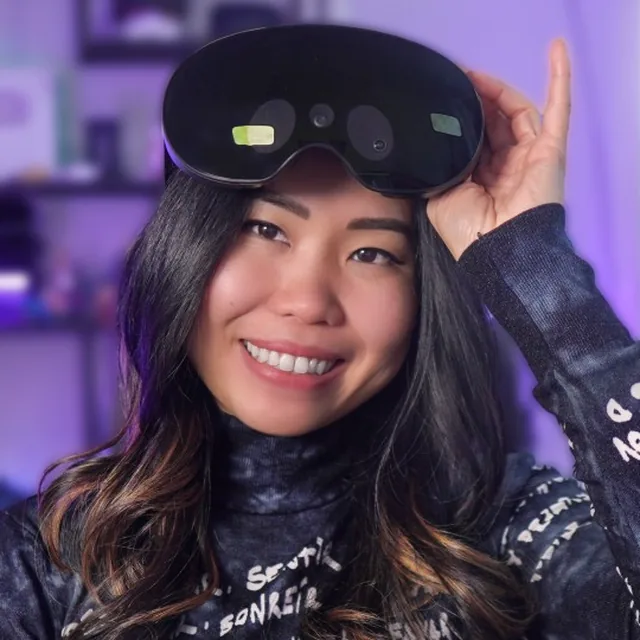 By CasPublished Updated Video + article5 min read
Most VR fans dream of total immersion in a small, comfy headset that doesn’t skimp on visuals. That dream is arriving faster than I thought, and the Bigscreen Beyond is a big step towards it: the smallest, lightest PC VR headset available, and the first one custom-made to fit your face. I’ve had a preview unit for the past month, so this Bigscreen Beyond review is about how it looks, how it feels, and the strange feeling it gave me. It isn’t the final version (I have to send it back, and things may improve), but it should be close to what ships in Q3 this year. Nobody sponsored this video.
What you get, and what you don’t
There’s not much hardware to review: it’s mostly displays and optics. Unlike a standalone headset, the Beyond plugs into your computer, so how well it performs depends on your PC. It uses SteamVR base stations and controllers for tracking, and those aren’t included, which drives up the cost. At least SteamVR tracking is still top-notch.
It has no built-in audio, so you need your own headphones. It does have an excellent microphone (that’s what you hear in the video), and optional prescription lens inserts are available.
Specs and visuals
- 5120 x 2560 pixels in total, on OLED micro-displays with pancake optics in an RGB stripe layout
- 75Hz and 90Hz refresh rates
- 90 x 93 degree field of view
- 28 pixels per degree, from packing all those pixels into one-inch displays, which beats many headsets on the market
The result is a crisp, clear image with no screen door effect. The OLEDs are what set it apart: deep blacks and vibrant colours. The sweet spot is easy to find, and I think the face foam helps with that. I didn’t expect visuals like this in such a small headset so soon.
The only complaints are a somewhat narrow field of view and occasional glare at the edges of the screen. You barely notice the glare in games, but it can show up in high-contrast scenes, usually when watching movies or working. Some people are more sensitive to that than others.
The custom fit
This is what makes the Beyond special. When you order, you scan your face with Bigscreen’s app. It captures your face shape and your IPD (the distance between your eyes), and the face cushion is made to fit your face, with the displays and optics lined up to your IPD. You need an iPhone XR or later for the scan, so borrow one if you don’t have one.
The result is the most comfortable VR I’ve had so far, and it reignited my spark for PC VR gaming.
One issue: the strap and my hair
The soft strap tends to slip off my hair unless I tighten it a lot, which gets uncomfortable. Chary had less trouble, maybe because her hair has a different texture. Bigscreen has announced it will include a top strap in the box, which should help, though I haven’t tried it yet. Once I tied my hair in a knot, the headset stayed firmly in place, and the comfort was amazing.
The strange feeling
My productivity plummeted. I got absorbed in Vertigo 2 (one of the best VR games I’ve played this year) and two hours flew by. I only took the headset off when Chary called to say she was leaving work, and I was shocked at how late it was and that I still had dinner to make.
The strange part came on another day, after about four hours straight. When I took the headset off, everything felt weird for a moment. The face foam kind of melts onto your face like memory foam, and at some point I’d forgotten I was wearing it. It had become an extension of my face, and I had to readjust to real life. It felt strange not to be wearing my Beyond. That might sound a bit scary, but it made me appreciate a truly comfortable headset, because it felt like trying VR for the first time again.
The only things that broke my immersion were physical fatigue and the call of nature, and that’s probably for the best, because I’m not sure we should be in a headset that long without breaks. It can also get a little warm, as there isn’t much air between your face and the headset. Not a big problem for me, but if you sweat, those breaks are good for cleaning the foam.
As a monitor, for movies and for flat games
I also tested it as a monitor replacement for work, movies and flat-screen gaming. It really shines for 4K movies and flat games. You can read text for work, but I don’t think the resolution is quite there yet: my normal monitor is still more comfortable to read on. Still, being able to use it for so long without issues is real progress compared to older headsets.
Because of the form factor you can eat and drink while wearing it. But there’s no nose gap or light leak at all, so finding your drink is tricky (we really need trackers for these things). The flip side is that the lack of light leak makes it completely immersive in games.
Bigscreen Beyond review verdict: is it worth it?
It’s not an easy recommendation, mainly because of the cost. On top of the $999 headset you need SteamVR tracking accessories and a powerful gaming PC. With the custom fit, resale value is practically zero. You can get a new face foam, but finding someone with the same IPD is hard, so sharing it isn’t really an option either. Many of you raised these concerns on my last Beyond video, and I get it. I think it’s only worth it if you have a specific use for it and will use it a lot.
I recently ran a poll asking what matters most in a VR headset, and the answers were comfort and visual clarity, the exact two things this headset has. Everyone would love one headset that does everything, but the tech isn’t there yet, so every headset makes compromises. Bigscreen picked the two things most people care about and improved them while compromising elsewhere. The Beyond isn’t the ultimate all-in-one headset, but it’s a big stride towards it, and hopefully it stokes the competition. The experience was a little strange, but it’s one of the best I’ve had in VR, and it can only get better.