The Brightest AND Most Affordable Glasses – RayNeo Air 3S Pro
My first hours with the RayNeo Air 3S Pro: 1,200 nits in real sunlight, sharper birdbath optics, six color modes and spatial sound.
 By CasPublished Updated Video + article5 min read
The new RayNeo Air 3S Pro claims to be the world’s brightest display glasses at 1,200 nits, nearly double the last model. After trying them, I can say this isn’t a tiny spec bump. Some changes are more noticeable than I expected, and a couple caught me off guard in a good way. These are my first impressions, with a full review to follow.
RayNeo sponsored this first impressions video. They didn’t get a say in what I think, and the full review will be unsponsored.
What the Air 3S Pro is
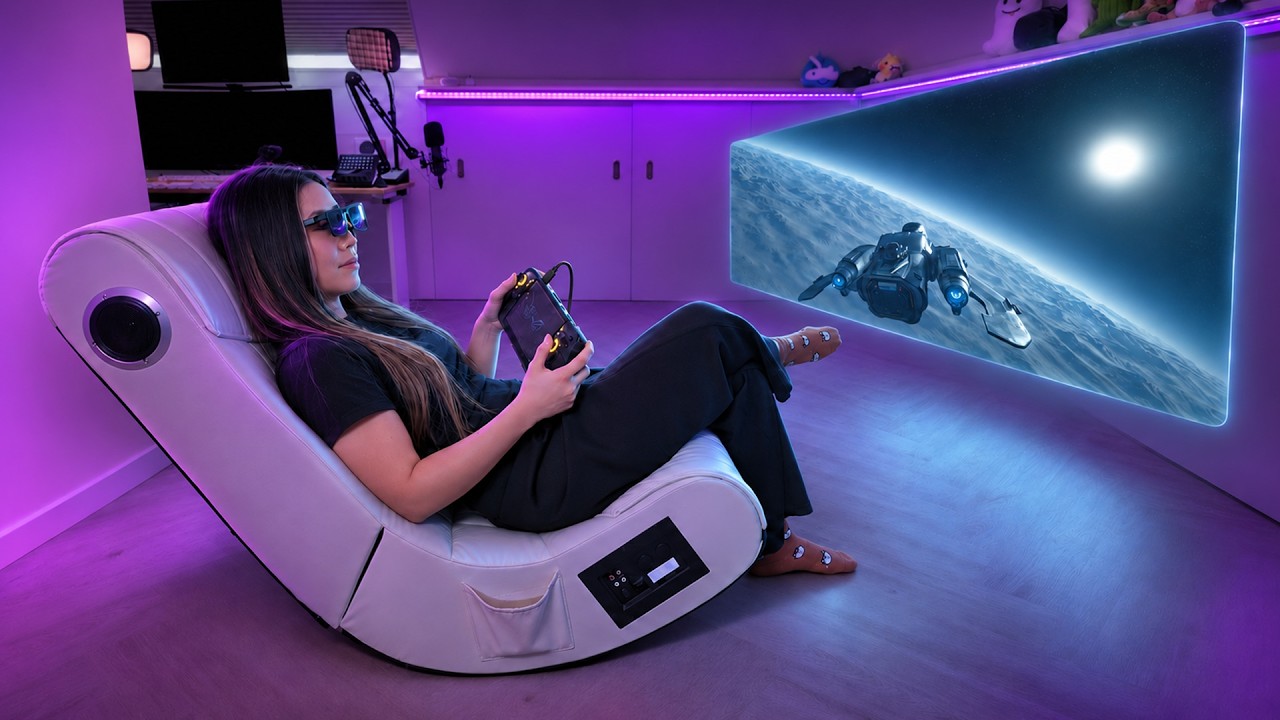
If you saw my review of the Air 3S, you know it nailed the basics: light, display-only glasses that cost less than most alternatives, at $269. These aren’t AR glasses. They’re video or display glasses that create the effect of a huge 201-inch screen about six meters away. There’s no chip, no stabilization and no mini-computer features. You plug them into almost anything with a USB-C port that supports DisplayPort.
- 1920 x 1080 in 2D, 3840 x 1080 in 3D
- 47-degree field of view, 49 pixels per degree
- 60 or 120Hz refresh rate
The Air 3S Pro keeps that formula and adds a big jump in brightness, more color control, an upgraded optical module and a small audio upgrade.
What’s in the box
- The glasses in a case
- A USB-C to USB-C cable
- A demo prescription lens adapter, so you can see how one would fit
- An extra nose piece, documents and a cleaning cloth (my collection keeps growing)
The case is new: a soft, felt-like fabric that’s super light and nice for travel. It doesn’t feel very protective, though, and the fit is tight. If that helps keep the price down, it might be a fair trade.
RayNeo Air 3S Pro brightness in real sunlight
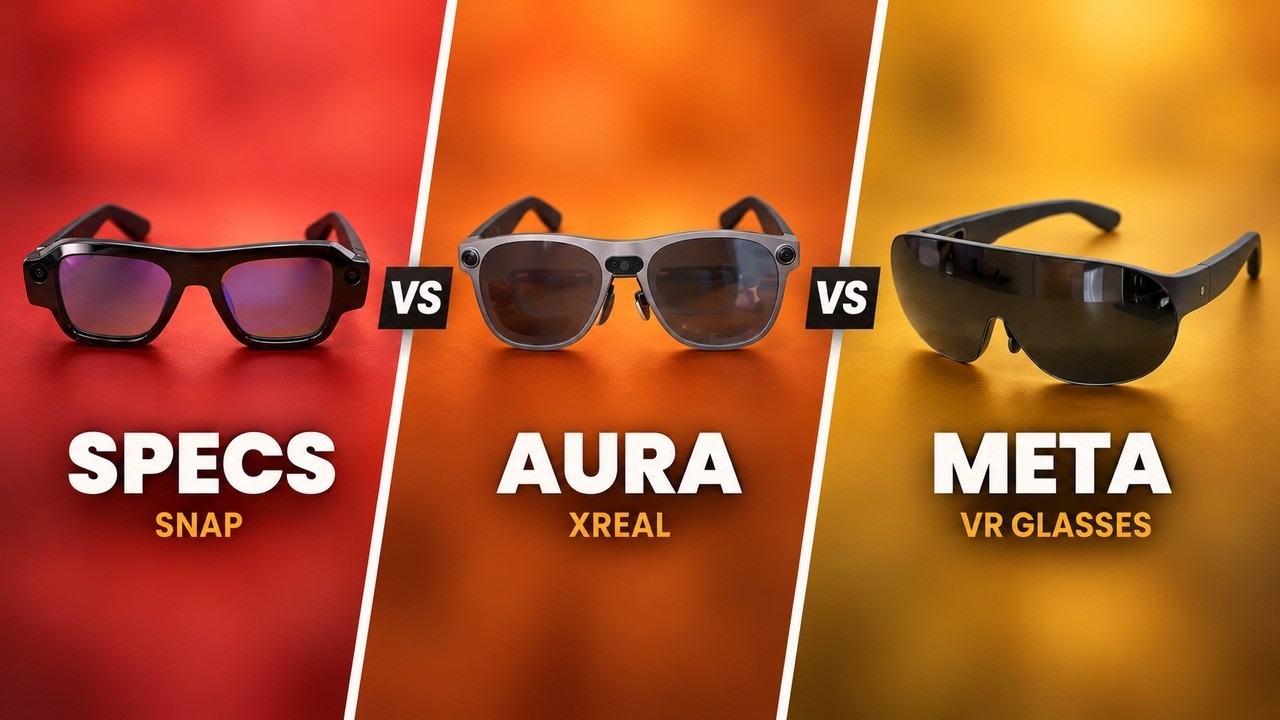
The Air 3S Pro uses micro-OLED displays that reach up to 1,200 nits in Vision Boost mode. For context, the XREAL One Pro goes up to 700 and the VITURE Pro hits 1,000. So I went outside into bright sunlight.
We were in a heat wave in our little froggy country, so it was properly sunny. I put on a very dark show, Wednesday, with Vision Boost on and brightness all the way up, and everything was visible. The colors still looked great. The glasses are a little see-through, so I could see a bit of my surroundings, which can be distracting. Reddit was readable too, and even looking towards the sun it stayed readable, just a little less so.
That matters because the Air 3S Pro has no electrochromic dimming and no light-blocking cover in the box. Without either, the only way to stay clear in direct sun is pure brightness, and here it pulls it off. RayNeo is releasing a lens shade at launch, but it’s sold separately, so I wanted to see how the glasses manage without it. Most display glasses I’ve tried can’t do this without dark covers or dimming.
To turn on Vision Boost, press the menu button on the left and pick it from the new menu. Cycling through screens, I was surprised how well the image kept its contrast without washing out.
Sharper optics and adjustable hinges
RayNeo says its updated, self-developed optical module improves light purity and transmission and cuts glare by 15%. In practice that means less ghosting and cleaner edges. It’s still birdbath optics, but I didn’t expect this much of a jump in clarity, especially edge to edge. It’s probably the clearest I’ve seen with this type of optics. I thought the Rokid Max 2 was sharp, and this feels like a step above. I’ve only used them for a few hours, so the final word comes in the full review.
The adjustable hinges make a big difference. They help you find the sweet spot, which the Rokid Max 2 lacked, and they make the missing stabilization easier to forgive: once the image is positioned well, it stays sharp even when you move.
Indoors it works just as well. Brightness has 20 levels, set with the buttons on the right temple. In a dark room at night I drop it to around level four, because anything higher is simply too bright.
Comfort and quirks
Comfort feels the same as before. They’re 76 grams without the nose pad, so long sessions shouldn’t be a problem. Two small quirks:
- A faint zooming sound from the right temple when connected to my MacBook. It doesn’t happen with other devices, so it’s likely an isolated case, and RayNeo is looking into it.
- Some warmth in the middle of the right arm after long use.
Neither was a dealbreaker.
Six color modes
The original Air 3S had three color modes. The Pro has six:
- Vision Boost for extreme sunlight
- Standard for everyday use and productivity
- Professional for accurate, realistic colors
- Movie for richer, more immersive visuals
- Game for pulling out detail in bright and dark areas
- Eye Protection to reduce strain in long sessions
I’ll test them more in the full review, but quick presets beat adjusting settings by hand.
Spatial sound and Whisper mode
There’s a new Spatial Sound mode next to Standard and Whisper. The four-speaker setup uses RayNeo’s dual opposing acoustic chamber design, which already impressed me on the Air 3S with clear sound and little leakage. RayNeo claims that in Whisper mode, people within 20 centimeters still can’t hear it.
So far it sounds as solid as before. Spatial Sound adds a theater-like effect that follows your head, but Standard still sounds best to me for everyday use. Whisper mode is handy when Chary is working next to me. It cuts the sound a lot, though not completely.
Switch 2 and other devices
RayNeo says the glasses work with over 1,000 devices, and it’s promoting them especially for the Nintendo Switch 2. Not all glasses support the Switch 2 yet, but RayNeo’s JoyDock accessory does, turning the 7.9-inch screen into a big personal cinema and adding battery life. I don’t have a Switch 2 to test, but I’ve used the JoyDock a lot with my first-generation Switch, and it’s one of my favorite ways to play.
Who the RayNeo Air 3S Pro is for
It isn’t a revolutionary jump, but the upgrades are well targeted. The 1,200-nit brightness makes these usable in bright sunlight without covers or dimming, and it helps indoors too: in a dark movie scene with a starry sky, Vision Boost keeps the stars crisp, where glasses under 1,000 nits, or the Air 3S at 650, would make them harder to see. The optics are clear enough that I prefer them over my 14-inch MacBook screen, even without stabilization. That’s impressive for birdbath optics.
If you already own the Air 3S and mostly watch indoors in darker rooms, you might not notice much difference. And if you want built-in processing or AR features, these aren’t for you; they’re strictly display glasses.
But if you live somewhere sunny, plan to use them outdoors a lot, or want extra punch in high-contrast scenes, the Air 3S Pro is one of the brightest and clearest display glasses you can get, and probably one of the most affordable. When we made this video RayNeo listed an early bird price of $249. In the full review I’ll go deeper into image quality, 3D mode and comparisons with the XREAL One Pro and VITURE Pro.