The Official Batman XR Glasses Are HERE… (HDR10!)
The RayNeo Air 4 Pro brings HDR10 to video glasses for $249, plus Batman and Joker editions. What the display, audio and 3D conversion are like.
 By CasPublished Updated Video + article5 min read
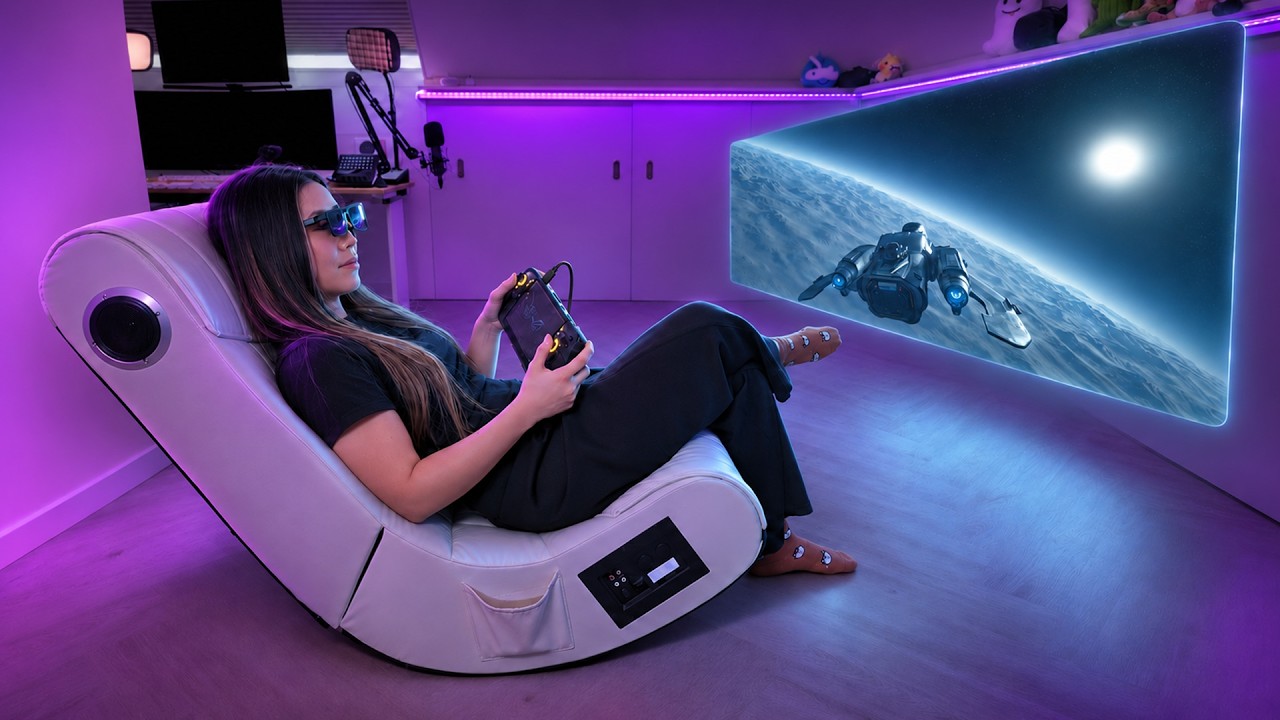
These are new display glasses, and RayNeo did something a little funny with them: they made Batman editions. The RayNeo Air 4 Pro is a pair of glasses you plug into a USB-C phone, laptop or handheld console, and it mirrors the screen inside the lenses so it feels like a huge virtual display floating in front of you. This time there’s a new chip, HDR10, speakers tuned by Bang & Olufsen and AI 2D-to-3D conversion, all starting at $249. Here’s what you get for that, and whether these superhero glasses still fit in a female pocket.
RayNeo sponsored this video. As always, that doesn’t change how I review things.
What’s new in the RayNeo Air 4 Pro
Inside is a custom Vision 4000 chip, developed together with Pixelworks. It powers what RayNeo calls the world’s first HDR10 display in video glasses, and it can use AI to turn normal SDR video into HDR. The audio is tuned with Bang & Olufsen, and the RayNeo XR app adds AI conversion of photos and videos to 3D. At a starting price of $249, that makes these one of the most affordable video glasses out there.
Unboxing the Batman limited editions
RayNeo sent over two limited editions: the Air 4 Pro × Batman Limited Justice Edition and the Limited Chaos Edition. The packaging is kind of awesome, with Gotham City details inside the box.
The glasses stay minimal: all black, with a small Batman logo on the side. I like that it’s subtle. The fun part is the custom shades you snap on the front:
- Bat Shade: sleek, matte and angular. Snap it on and you look like you’re running surveillance in Gotham.
- Joker Shade: in the Chaos edition, and a bit more chaotic looking.
- Display stand: I didn’t expect this one. The base is metal so it has some weight, the top is plastic, and it’s meant for the shades but is sturdy enough to hold the glasses too.
- Sound tubes: new to me on video glasses. You wrap them around the speakers on the temples, and they’re supposed to cut sound leakage by around 80%. I think they only come with the special editions.
- The usual extras: a spare nose piece, cleaning cloth, documentation, a demo prescription adapter and the normal light blocker.
The Batman editions start at $269 and the standard version at $249, which isn’t a big difference.
I don’t think I’ll walk around in the Batman shades very often, but it did give me an “okay, this is actually kind of cool” moment, and I like having them on my desk. From a marketing point of view it’s smart: it might bring Batman fans to a kind of device they’d never considered.
Display
A quick disclaimer: these are marketing samples, not final retail units, so things could change slightly. The specs:
- 0.6-inch micro-OLED displays
- 1080p per eye
- 120Hz refresh rate (60Hz by default)
- 47-degree field of view
- About 49 PPD
- Up to 1,200 nits, with eight brightness levels, one of the highest in this category
RayNeo also uses what it calls HueView 2.0, a multi-layer coating that reduces glare. The optics are birdbath lenses, which is why these glasses are a bit bigger than prism-based designs.
RayNeo has always been good at displays: bright, sharp and still usable outdoors. That’s true here as well. It’s simply a really nice display to watch things on.
HDR10 is the big new feature
RayNeo says these are the first video glasses with HDR10. The Vision 4000 chip handles 10.7 billion colors, against the roughly 16 million in many other glasses. In practice that means brighter highlights, deeper blacks and richer colors.
You turn HDR on in the on-glasses menu, but it only works with devices that output HDR10, like the iPhone 15 and later, Switch 2, Steam Deck and PS5. On a Mac or PC you’ll have to check whether your setup supports it. For everything else there’s AI SDR-to-HDR conversion.
Both HDR modes look really good. SDR looks a bit washed out next to them, and with HDR you get noticeably more contrast and depth. I found myself not wanting to switch back to SDR, and I’ve been testing a lot of display glasses lately (I’m working on a big comparison).
2D-to-3D conversion
In the RayNeo XR app you can convert normal photos and videos into 3D. I’ve said it before: 3D looks really good on glasses like these, because each eye gets its own display, so you don’t get the weird cinema 3D effect that messes with your eyes. Regular side-by-side 3D content looks beautiful.
The AI conversion can look great too, but it depends on the content. It worked much better with horizontal videos than vertical ones, and depending on how well the AI separates foreground and background, you might see some artifacts. Overall it does a surprisingly good job.
The limitation: it doesn’t convert whatever you’re watching on the fly. You can’t open a YouTube video and have it turn 3D. The video has to be downloaded and loaded into the app first. I’d love an option to paste a YouTube link instead.
Audio and the sound tubes
The glasses use a quad speaker array tuned with Bang & Olufsen, with three audio modes:
- Surround for movies and gaming
- Standard for balanced everyday listening
- Whisper to reduce leakage in public, or when you’re sleeping next to someone
For open speakers in glasses they sound pretty good, good enough for when I don’t want anything in or over my ears. For the best sound, headphones are still the way to go.
When I first put the sound tubes on, I didn’t notice a difference, because you have to turn on sound tube mode in the menu. Once I did, I was surprised: the sound felt fuller and more directed, with more bass and less leaking out. Very cool for such a simple thing.
Design and comfort
The design has barely changed from previous RayNeo glasses. Same frame, same form factor, still about 76 grams without the nose piece, which keeps them comfortable. The temples still adjust in three positions, which matters with glasses like these so you can line up the displays, and there are two interchangeable nose pads.
And the most important test: can I still fit this big TV in my pocket, even with the Batman shade on? Yes, it still works.
What’s missing
For the price, RayNeo packed a lot in, but some things aren’t there:
- No 3DoF tracking, so you can’t anchor the screen in space. It always moves with your head.
- No screen stabilization, which some competitors offer.
- The software is still pretty minimal compared to some other ecosystems.
Considering the price, I think that trade-off makes sense.
Is the RayNeo Air 4 Pro worth it?
What these glasses do, they do very well. RayNeo keeps improving with each generation, and most of the upgrades this time are on the inside: HDR, the Vision 4000 chip, better audio tuning, and new accessories like the shades and sound tubes. The outside hasn’t really changed, so it’s an evolution, not a revolution.
If you just want a simple portable screen for movies, games or your laptop while travelling, without spatial tracking or a complicated ecosystem, then for $249 there really isn’t much that beats it. Would you wear the Batman shades in public, or are they a desk piece?