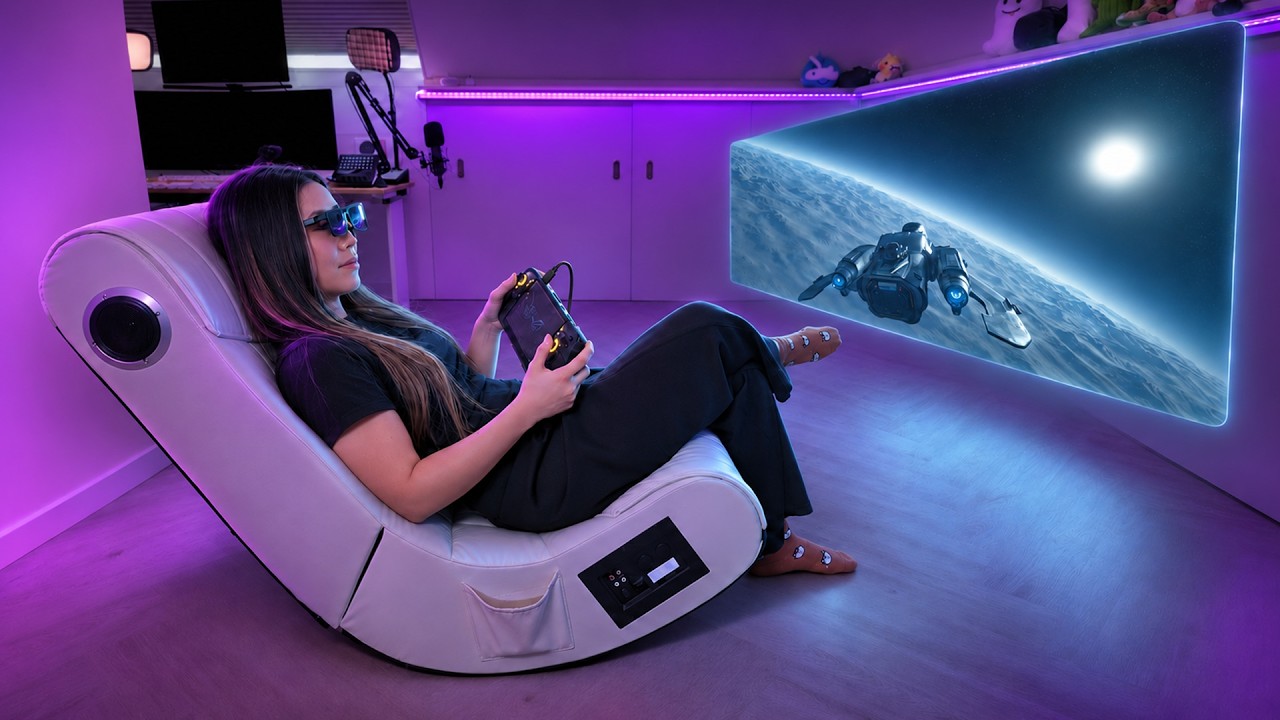
THIS 201″ Portable TV Just Got HUGE Upgrades! (RayNeo Air 2s)
First impressions of the RayNeo Air 2s display glasses and the RayNeo Pocket TV: what changed from the Air 2, gaming with the JoyDock, and who it's worth it for.
 By CasPublished Updated Video + article4 min read
The RayNeo Air 2s are the latest display glasses from TCL’s RayNeo division: a 201-inch virtual TV screen you carry in your pocket, for gaming, studying, working or traveling. RayNeo also has a new Pocket TV that pairs with them. These are my first impressions after a quick test run, with what changed from the Air 2 and how I actually use glasses like these. A full review or comparison video comes later.
TCL RayNeo sponsored this video and sent us the products. That pays for our time, not for the opinions.
Unboxing: finally a bigger case
The case is bigger, which is a welcome change. It holds the glasses and a cleaning cloth, and you can even fit the Pocket TV in it. All the previous cases were small with no room for accessories. In the rest of the box you get a prescription lens adapter, an extra nose piece, the charging cable and the manual.
What’s new in the RayNeo Air 2s
The design looks the same as the Air 2, so at first glance you might think little changed. The upgrades are mostly inside, and they’re noticeable:
- Sharper edges. RayNeo optimized the optical engine for edge-to-edge clarity, and you can see the difference. Blurry edges were one of the biggest drawbacks of the old model, so I’m glad this improved a lot.
- A bigger eyebox (the sweet spot) of up to 11.2 x 6.5mm, which suits people with wider pupillary distances.
- Color adjustment on the glasses. Three color levels, set with the buttons on the temple arms. It’s the first time I’ve seen this on the glasses themselves instead of only in an app.
- Four full-range speakers with dynamic stereo sound, double what most glasses have, and 6dB louder than before.
- Whisper mode to reduce sound leaking out, something these glasses have always done well.
Specs that stayed the same
- 78 grams, light enough to wear for a long time.
- Birdbath optics with two Sony micro OLED displays and a 46-degree field of view, which feels like a 201-inch screen seen from 6 meters away.
- Full HD (1920 x 1080) at 49 PPD.
- 60Hz or 120Hz refresh rate.
- Physical buttons for volume, brightness, a menu for the refresh rate, and switching between 2D and 3D.
- TÜV Rheinland certification for eye protection, which RayNeo says means less eye strain in long sessions. I’m not sure how proven that is.
Keep the 201 inches in perspective. It’s Full HD, not a 4K TV, and you’d normally sit 2 to 3 meters from a TV, not 6. Still, because it’s so close to your face, the screen really does look impressively large.
For comfort, the ear hooks and temples are soft silicone, and the temples and nose pads adjust in three positions for different face shapes. I could wear them for a few hours without noticing them much. They’re heavier than regular glasses and you do feel them at some point, but we’re getting there. One day they’ll be as small as normal glasses, and I can’t wait.
Connecting your phone, console or PC
The glasses plug in over USB-C to devices with DisplayPort output, like the Samsung S24 or iPhone 15 series. If your phone doesn’t support it, you can use RayNeo’s adapters or the Pocket TV. Check that your device is compatible before buying glasses like these. For gaming, the Steam Deck works straight away, while the Switch needs an adapter.
The RayNeo Pocket TV
The Pocket TV is basically Google TV in a small portable box. It’s Google certified, so connected to the glasses you get over 40,000 movies and shows across more than 10 streaming platforms, plus over 10,000 apps.
- Google Assistant built in, for hands-free control.
- Chromecast mirroring, so you can cast from any app that supports it, whatever your phone.
- A 6,500mAh battery for up to 5.5 hours of watching, good for long commutes and flights.
- 3GB of RAM and 64GB of storage, expandable with TF cards or USB drives.
I really like the interface. It’s by Google, so it’s well thought out and easy to use. When we made this video, the Pocket TV cost about $179, or $500 bundled with the glasses. I think it’s a solid add-on for frequent travelers who don’t want to rely on their phone, and for anyone whose phone lacks DisplayPort output. If your devices already work with the glasses, you may not need it. I haven’t had much use for it myself, because I mostly use these glasses for gaming.
Gaming on the Switch with the JoyDock
The Steam Deck connects directly. The Switch needs the JoyDock, an accessory with a 5,050mAh battery that weighs 282 grams. It’s a bit bulky, but it attaches to the Switch nicely and doubles as a power bank: even with the glasses and the Switch both at 0%, it can power both for up to 5 hours.
It turns your Switch into a docked setup, so you take off the Joy-Cons and play like on a TV. The best part is that it supports Full HD at 120Hz, while the Switch in handheld mode is 720p at 60fps.
How the RayNeo Air 2s look in use
I was skeptical that the upgraded specs would make a big difference, but after using them a few times, they did step things up. The difference from the Air 2 isn’t huge, but the picture looks noticeably sharper, and I can now work in these glasses and read text more clearly. YouTube and Netflix look much like before, with good colors, deep blacks and decent sound.
Brightness goes up to 600 nits in 10 steps, from the glasses or the app. That’s handy going from day to night when you don’t want the screen too bright.
We use them at home too. It’s a niche situation, but Chary and I often play games at the same time, and when one of us has the living room TV, the other plays or watches on the glasses. It’s a bigger screen than the device itself, and much more comfortable than bending your neck down.
Are the RayNeo Air 2s worth it?
These are the reasons we love glasses like these and keep reviewing them. The biggest downside is the price: $399 for the Air 2s when we made this video, which may not be worth it if you don’t travel much or share a TV. If you’re choosing between the Air 2 and the Air 2s, I’d definitely go for the Air 2s. The improvements aren’t huge, but they’re noticeable, and that makes it more future proof.
Both the glasses and the Pocket TV are solid upgrades in their categories. If you want a big screen you can take anywhere for work, gaming or unwinding, they’re worth a look.